

Architecture/Engineering/Construction have stories to tell about their projects and their people. The problem is that many don’t have processes in place to capture those stories and save them for future use.

Jason Dittrich, Director of Business Development & Marketing at Mueller Associates in Baltimore, Maryland, says firms need to “instill a culture of storytelling for their projects and their people.”
Why Stories Stick
In Storynomics, authors Robert McKee and Thomas Gerace emphasize that we are wired to remember stories. “As a result, stories lodge and live in memory far longer and more vividly than facts and numbers,” they wrote.
That staying power matters in a competitive market. Dittrich recently attended a pre-proposal meeting with more than 300 attendees. He predicts most firms will submit similar projects with similar approaches. Many will also turn to AI to help write their proposals, adding another layer of sameness that prospects recognize.
Well-told project stories show prospects how your team performs under pressure. They can describe unforeseen site conditions or issues that surface during design development. A/E/C firms rightly value their technical expertise, but they also need to be willing to share project challenges and how they overcame them.
Story Delivery Matters
Storytelling also plays a key role at the shortlist interview. Dittrich cites the example of three equally qualified teams. The winner brought a physical model and interacted with the client instead of showing renderings. “It was the same story, with a different delivery,” he says.
Prospects also want to hear how firms solve unexpected problems. “Candid accounts of what went wrong and how the team fixed it are more credible,” Dittrich says.
Go Beyond the Facts
Are your project overviews sticking to the facts? A good interview with project stakeholders can uncover answers to questions like these:
- What was the client worried about?
- What went wrong?
- What decision changed the outcome?
- Who stepped up?
- How did the team respond?
- What did the client value?
Knowing what to ask is a starting point. Look for ways to uncover the stories behind the facts. It’s important to ask follow-up questions, seek examples, or explore an unexpected detail.
The answers give an authentic picture of how your firm navigates challenges.
AI can help organize and polish a story, but the authentic details have to come from the people with direct knowledge of the project.
How Do You Capture and Save Stories?
Dittrich challenges firms to recognize the value of stories and then implement realistic processes to save them. That starts with management buy-in. Leaders need to agree that stories are worth collecting, then support a process that makes it happen.
One approach is to establish a protocol for interviewing project managers at close-out or another milestone. Marketers can share questions in advance, then conduct the interview through Teams or Zoom so the conversation is recorded. Some firms save these transcripts alongside other project information.
Start with one project and a brief interview at a key milestone, then build from there.
Coordinate the process and keep stories in a shared, searchable location. Label each story by project, client, challenge, and outcome so marketers can find relevant examples when a proposal or interview opportunity arises.
Marketers and managers can also talk with clients after project completion to learn how the project has made a difference for end users. With permission, you can save key client quotes for future proposals and marketing collateral.
These stories will resonate with prospects and recruits alike. As Dittrich puts it, “Clients remember the stories that have some sort of human connection to their pain points.”
Why Marketers Should Learn the Work
Dittrich believes marketers and business developers need to understand their firm’s projects. They don’t need to become engineers or architects, but a deeper understanding of how projects come together helps them recognize meaningful challenges and ask better follow-up questions.
In his own role, Dittrich has focused on learning about technical processes. That knowledge proved valuable when he wrote the firm’s book, Invisible Excellence: Mueller Associates and the Art of Engineering. He spent two years on the 304-page history, published for the firm’s 60th anniversary.
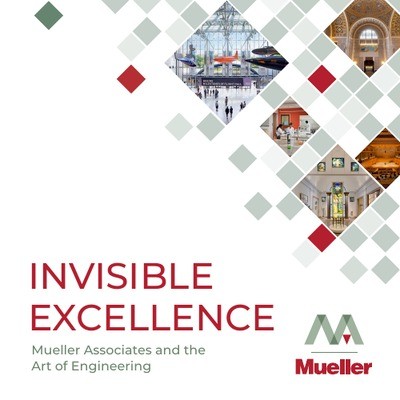
“It’s built on interviews and anecdotes rather than a list of projects,” he says.
Capturing stories isn’t only about winning the next project. It’s also about preserving the experiences, people, and knowledge that reflect an organization’s values.
Does your firm have a process for capturing and saving project stories? Share what’s worked, or what hasn’t, in the comments.
Need Assistance?
Do you need help capturing stories from your project managers or clients? I can help, from conducting interviews to turning those conversations into case studies for your proposals and marketing.
I also offer presentations on how to interview technical professionals and clients to uncover meaningful stories.
Learn More
Want to learn more about storytelling, case studies and other communications for A/E/C industries? A/E/C Connect is my newsletter. Subscribe on LinkedIn to be the first to see each new entry. If you have a challenge or question you would like me to address, contact me at blaizecommunications@gmail.com.
