
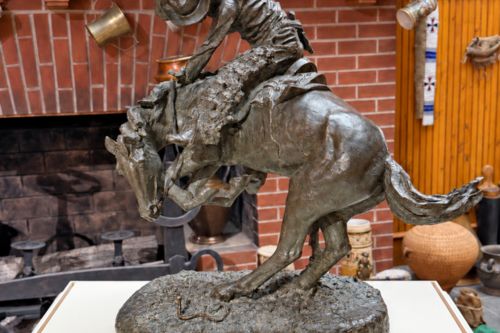
When I recently saw The Rattlesnake, a sculpture by Frederic Remington, I was captivated. It shows how a small but powerful rattlesnake can terrify a horse and nearly throw its rider. The snake is barely longer than the horse’s hoof, yet the horse twists away from it while the rider grips hard to stay on.
Remington copyrighted the sculpture in 1905 and reworked it in 1908. More than a century later, this dynamic moment still impresses visitors.
There’s a reason this sculpture, displayed at the Buffalo Bill Center of the West in Cody, Wyoming, stopped me. Recently, my friend Rebekah McKenzie was jogging on a remote trail above Billings, Montana, when a prairie rattlesnake bit her. Despite her injury, Rebekah ran nearly two miles to the trailhead, where her daughter and a neighbor met her and rushed her to the hospital. Snakebites are rare in Montana, but hers kept her in the hospital for three days.
Find Your Rattlesnake Moments
When I looked at the sculpture, I didn’t just see a bronze horse and a snake. I saw Rebekah’s story. Your prospects listen to your project stories the same way, through their own experiences. That’s why Architecture/Engineering/Construction firms should look for the memorable moments in their projects: a client’s concern, a difficult decision, or the relief when a solution works. These moments can reveal why a project mattered and help a prospect relate to the experience.
Ask the Right Questions
How do you capture these moments? Start with these questions:
- What moment from this project will you remember most?
- What happened and who was involved?
- What did your team do next?
- How did the outcome affect the client or end user?
Use these questions to guide the conversation and be ready to listen and follow up as needed. When you share stories that show how your team addressed a challenge or responded to someone’s concerns, you build credibility with your existing clients and prospects.
Build a Story Library
Save these stories in your project database. Record the people involved, your team’s response, the outcome, and any memorable quotes while the details are fresh. Get permission, if needed, to use the quotes in your marketing materials. Start small. Capture one story from a recent project. You don’t need a story from every project, just the ones that show how your team responded when it mattered.
If you build a library of strong stories, you can match them to a prospect’s challenges. Perhaps you met a tight deadline, redesigned a site plan, or addressed community concerns. These stories show prospects you can handle the unexpected.
The Rattlesnake is an intriguing sculpture, but it stayed with me because of Rebekah and the imminent danger she faced from a snakebite. Your listeners bring their own experiences and concerns to your project stories, too. Capture and save the moments that address their pain points and show how your firm can help.
Read more about Rebekah’s experience in Yellowstone Valley Woman: “Two Miles to Survival.”
Need Help Uncovering Stories That Connect?
Your firm’s project experiences can become stories that address your prospects’ challenges and show how you can help. I offer interviews, writing support, and presentations to help your team uncover and use those stories.
Learn More
Want to learn more about storytelling, case studies and other communications for A/E/C industries? A/E/C Connect is my newsletter. Subscribe on LinkedIn to be the first to see each new entry. If you have a challenge or question you would like me to address, contact me at blaizecommunications@gmail.com.
